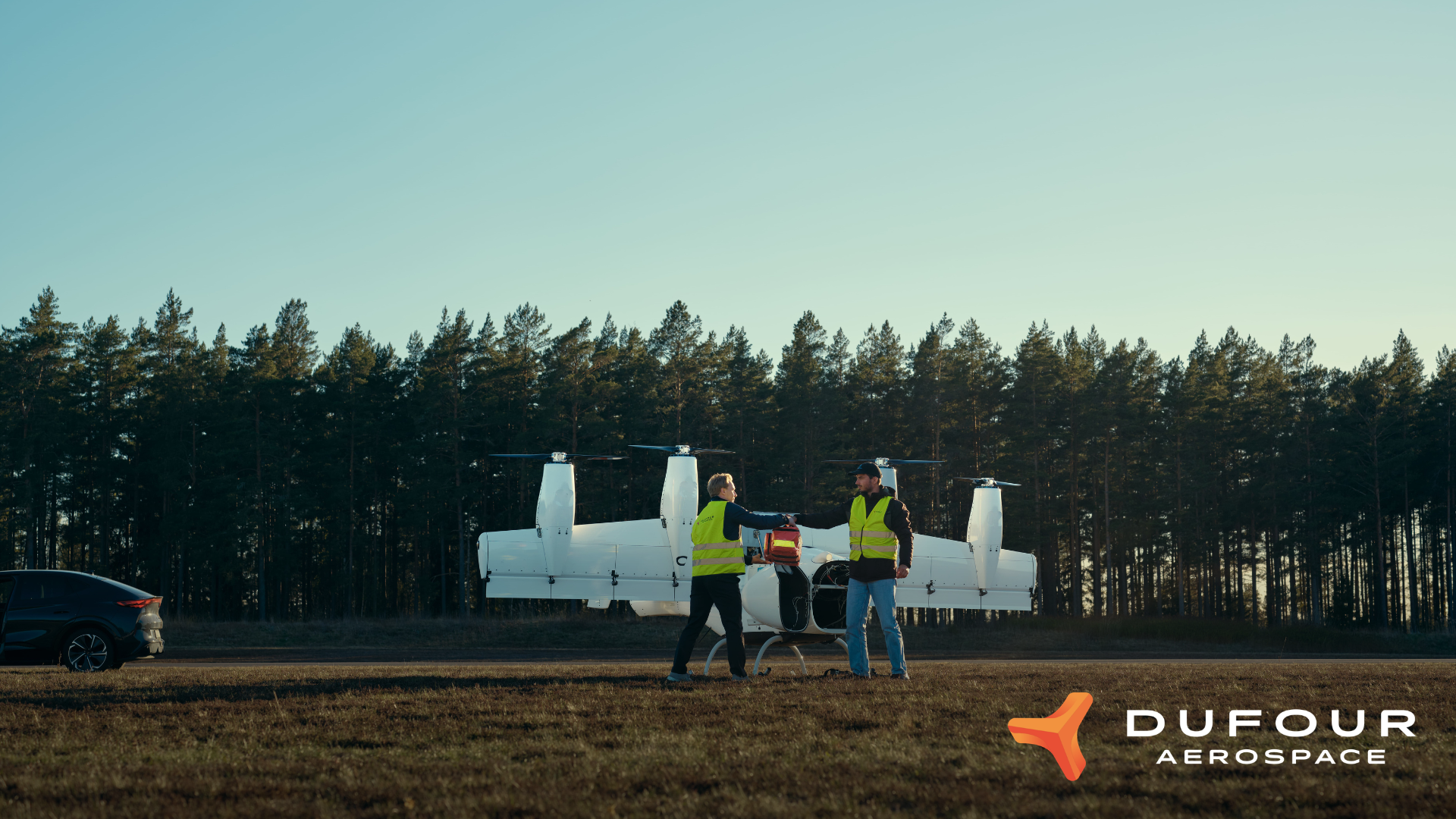
Advanced air mobility is often showcased through flight tests and demonstrations. These milestones matter, but they are only the beginning. Real progress happens when aircraft are designed from the outset for operational use, in real environments, with real constraints.
At Dufour Aerospace, we design aircraft for missions, not moments. Our focus is on building uncrewed aircraft systems that can move beyond controlled test settings and into day‑to‑day operations across logistics, medical transport, and regional and public service missions.
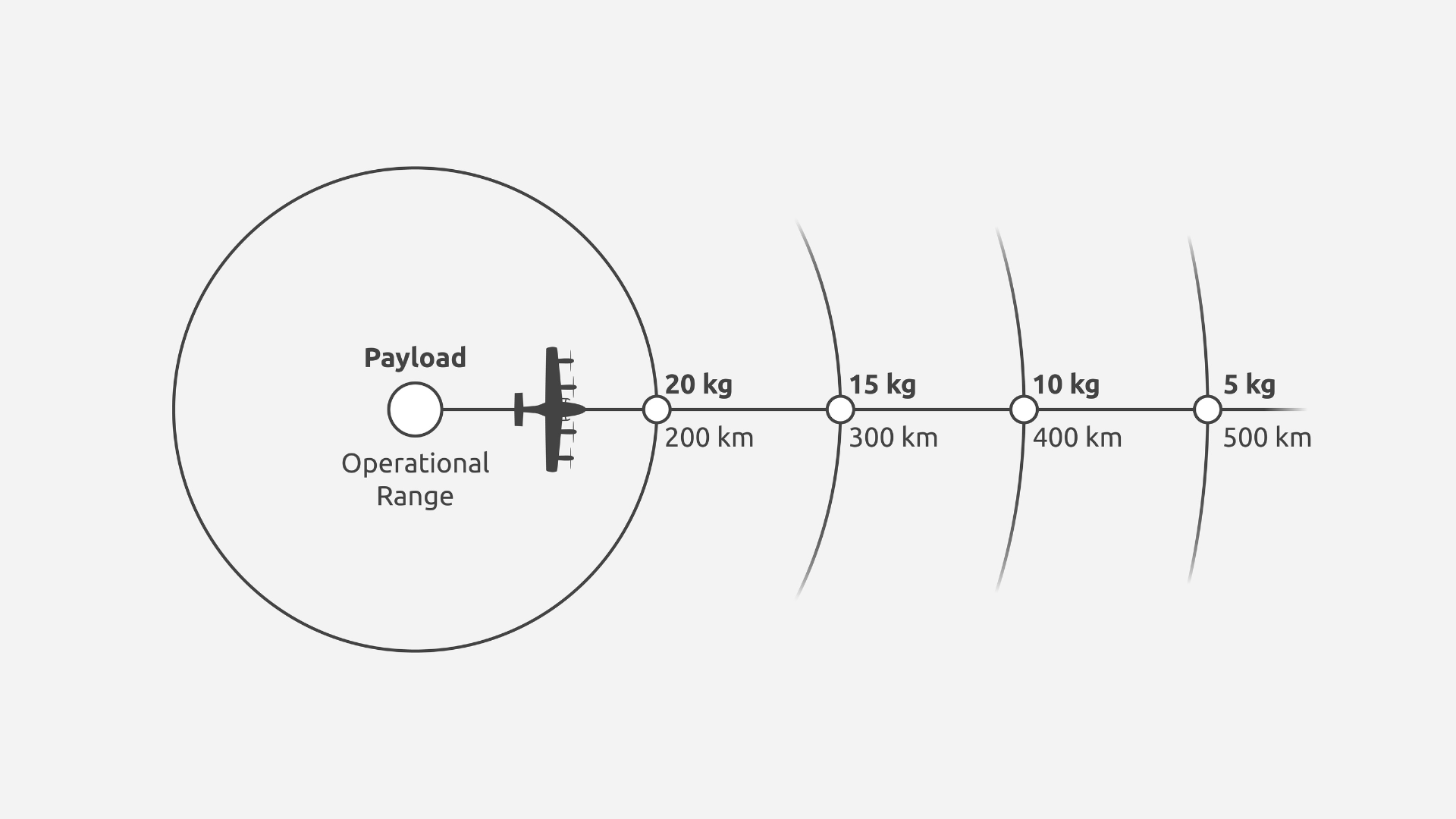
That approach shapes every design decision we make, from propulsion and flight control to payload integration and operational workflows. Recently, we demonstrated the capacity to carry a 20 kg payload over a distance of 200 km in a dedicated flight campaign. We also introduced our first remote operator room in Dübendorf and established a commercial partnership with Savback Helicopters to advance long-range drone logistics in Sweden. In addition, we completed the initial integration and testing of operations control centre capabilities with Volatus Aerospace in Canada. These developments reflect our continued transition towards commercial readiness.
Operating in the real-world means accepting complexity. Weather is unpredictable, terrain is uneven, infrastructure is limited, and missions rarely follow ideal profiles.
In aviation, these challenges are not exceptional cases. Weather remains one of the most consistent operational disruptors, contributing to an estimated 10-15% of delays across European airspace depending on conditions and region (Eurocontrol Network Operations, 2023-2024). For uncrewed aircraft operating at low altitude, wind and turbulence can be even more critical.
Regulators explicitly recognise wind and degraded environmental conditions as key operational hazards that must be mitigated through design, safety margins, and procedures (EASA SORA 2.5, 2024). Real-world eVTOL operations require platforms that remain predictable and controllable beyond ideal test environments.
Designing for real‑world eVTOL operations requires a different mindset. Systems must be robust rather than optimized only for peak performance. Automation must support operators instead of replacing them overnight. Safety margins must account for degraded conditions, not just nominal cases. And aircraft must integrate into existing logistics and aviation ecosystems, rather than relying on tailored infrastructure.
This is why Dufour Aerospace prioritizes operational realism. Our aircraft are built to take off and land from simple, flat surfaces close to where missions actually start and end, whether that is in front of a hospital, a warehouse, or a remote operations base. We focus on endurance, efficiency, and repeatability because those are the parameters that determine whether a drone becomes part of a supply chain or remains a prototype.
Many logistics and medical transport use cases share the same challenge. Operators need long‑range capability without access to runways, and helicopters are often too expensive or resource‑intensive for routine missions.
Rotorcraft remain essential for certain emergency missions, but their operating costs make them difficult to scale for frequent, everyday logistics. Even light helicopter operations can range from several hundred to several thousand euros per flight hour once fuel, maintenance, crew, and readiness requirements are included (European HEMS cost studies, 2023).
The Aero‑200 tilt‑wing eVTOL aircraft addresses this gap. It combines vertical takeoff and landing capability with the aerodynamic efficiency of fixed‑wing flight. This allows it to operate like a helicopter when space is limited, while cruising efficiently like an airplane over longer distances.

Designed around a hybrid‑electric powertrain, Aero‑200 targets long‑range missions with predictable performance and low operational costs. Typical logistics profiles, such as transporting 20 kilograms of cargo over 200 kilometers, reflect real mission needs rather than optimized test cases. The goal is flexibility, safety, and efficiency in environments where infrastructure is limited and reliability matters.
Real‑world missions rarely fit into a single category. Medical logistics, critical spare parts delivery, regional connections, and public service operations all place different demands on aircraft, but they share common requirements around safety, reliability, and operational simplicity.
Medical transport is a clear example. Moving blood, medicines, vaccines, or tissue samples requires predictable transit times, stable flight profiles, and secure payload integration. A 2025 paper on inter-hospital emergency deliveries in Madrid reported time savings of 2-26 minutes (35-58%) versus road transport, and noted drones could deliver within approximately 15 minutes with high reliability, including during peak traffic (MDPI, 2025).
These missions also demand close coordination with healthcare partners and regulators, and they leave minimal margin for error. Designing aircraft for this context means prioritizing system reliability and repeatable operations over experimental capability.
Logistics and regional operations introduce similar constraints. Connecting warehouses, supporting remote settlements, or delivering urgently needed parts requires aircraft that can operate regularly, not occasionally. Range, payload capacity, and endurance must be balanced with ease of deployment and integration into existing workflows.
Public service and search and rescue missions add another layer of complexity. Endurance, payload flexibility, and the ability to operate in challenging weather conditions become critical. These missions reinforce why aircraft must be designed for robustness first, with automation and advanced sensing supporting human decision-making.
Aircraft designed for real operations must also function as mission platforms. That means accommodating different payloads without extensive reconfiguration and supporting high‑value sensors alongside logistics cargo.
Aero-200 has been developed with payload flexibility in mind, supporting internal payloads and front-loaded or slide-in external payload concepts. The platform is designed around real logistics requirements, including mission profiles such as 20 kg cargo transport over 200 km, while also enabling integration of advanced sensing payloads such as LiDAR for inspection, mapping, and surveillance applications.
Flight testing with commercial LiDAR and sensing payloads has demonstrated that tilt‑wing platforms can replace larger and more expensive aircraft for certain data acquisition missions. Automating these operations – while maintaining data quality and operational safety – is a key step toward scalable, real‑world deployment.
Designing for the real-world requires industry collaboration and feedback from real operations. Partnerships with organizations such as Volatus Aerospace, Savback Helicopters, and Air Zermatt allow Dufour Aerospace to validate assumptions and refine systems based on actual mission experience.
“The focus of our work with Dufour Aerospace is on building operational capability, not promoting individual performance metrics,” said Glen Lynch, Chief Executive Officer of Volatus Aerospace. “Governments and commercial operators alike are increasingly looking for reliable, runway-independent cargo solutions that can operate in remote and challenging environments. This partnership allows us to apply our operational, regulatory, and training expertise to help shape such a capability.”
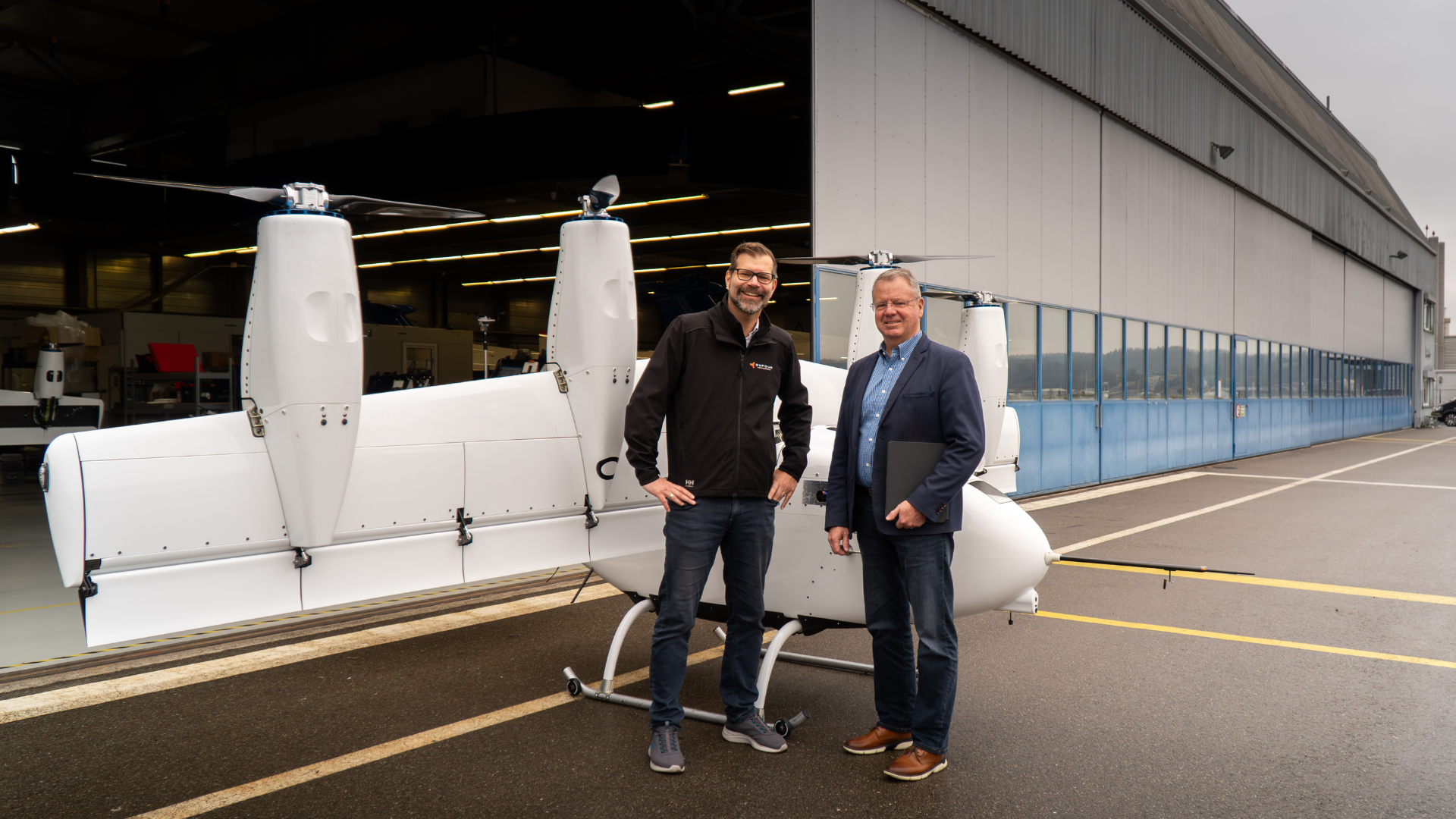
From medical logistics flights and long‑range simulations to demanding operational environments, each collaboration provides insight into how aircraft behave outside ideal conditions. This feedback directly informs improvements in flight control, autonomy, payload integration, and operational procedures.
Rather than separating development and deployment, we treat them as part of a continuous loop. Testing leads to operations, operations lead to data, and data leads back into design.
Advanced air mobility will not scale through ambition alone. It will scale through aircraft that work reliably, integrate smoothly, and deliver value in real missions.
At Dufour Aerospace, we are deliberately cautious about promises and precise about performance. Our focus is on building aircraft that can be operated safely, efficiently, and repeatedly across logistics, medical transport, regional operations, and public service missions. Demonstrations matter, but deployment matters more.
By designing aircraft for the real-world, we aim to support the gradual, sustainable adoption of uncrewed aviation where it delivers clear operational benefit.
Dufour Aerospace is pioneering drones for critical missions. Based in Switzerland, Dufour Aerospace develops and manufactures efficient and sustainable aircraft for cargo transportation, logistics, and public safety. The Aero-200 drone features distributed electric propulsion and a hybrid module to meet today’s Advanced Air Mobility and medium-sized drone market requirements.
Contact: media@dufour.aero
More info: www.dufour.aero
Visit site:
ABOUT DUFOUR AEROSPACE:
Dufour builds the scalable operating layer for automated aerial logistics. We integrate DufourAircraft as high-integrity flying assets with DufourOS – the software multiplier enabling remote fleet supervision from centralized control centers. The result is a scalable aerial logistics network: automated, route-based air freight operated day and night.
